Tai Chi Classes in Portland for Health, Vitality, Longevity and Self Defense


Tai Chi is a practice with several facets.

sam1 7272 Portland Tai Chi Classes for Health, Vitality, Longevity and Self DefensePhysically the training from our Portland Tai Chi classes cultivates a supple strength and flexibility. One develops grace and balance as the postures condition core support muscles. The body becomes less susceptible to damage as the weight bearing exercises gradually increase bone density and the stretching movements make a person more pliable. The breathwork counteracts stress, improving blood pressure and heart rate by calming the sympathetic and parasympathetic nervous system.

Mentally the principles from Portland Tai Chi training of redirecting force prove invaluable in everyday life. Many find that any debate they enter into becomes a game of psychological push-hands (a tai chi exercise where one learns to counter an opponents force and defeat them without having to directly overpower them). With practice one develops the ability to maintain a calm center regardless of circumstance.

Spiritually, our Portland Tai Chi practice cultivates ones energy. It can be a key piece of an internal arts practice to elevate your spirit; which is to say, gaining greater clarity and awareness, becoming less susceptible to petty distractions. With a clear mind one learns to put their full intent into their movements. Energy follows this intent extending the movements beyond their regular potential.

The Portland Tai Chi martial training requires intensive practice. An adept practitioner can handle an opponent of greater size and speed. To do this requires that all aspects of the practice be well developed. It is the combination of a responsive healthy body from the physical, the clear mind and sensitivity of the mental and the heightened energy and awareness of the spirit that make Portland Tai Chi training effective. With right timing one doesn’t need raw speed. With actions that are responses to opportunities one doesn’t need raw strength.

With this understanding you can see that a Tai Chi practice can be adjusted to meet your goals and abilities. For an intro or to discuss to details of how our Portland Tai Chi classes can work for you contact us here.

For more information on Portland Tai Chi training, please read the articles below.


The many approaches at our Portland Tai Chi & Qigong training center.

Though originally practiced as a martial art Tai Chi can be considered a “lifestyle enhancing practice” with a diverse range of approaches to the training. Each individual’s Tai Chi and Qigong falls into a spectrum ranging from medical/therapeutic, martial and philosophical, to spiritual. While any practice will contain components of each range, your chosen focus will determine the shape of your training.

A few universals: Your Portland Tai Chi and Qigong training develop the body to a baseline of health, responsiveness, and efficiency of movement. Mentally we build to a baseline of clear-headedness, presence and purposeful movement. From this core skill set you can see how well primed you will be to pursue your individual goals. The slow, weight-bearing movements of the Tai Chi forms develop structural ligament strength, bone density and promote a healthy free range of motion in every joint of the body. Movements involving compression and release of the body on a variety of angles lightly massage the organs to encourage ideal function. Practicing Qigong or one of the forms involves a basic mindfulness meditation, which is to say, training our minds to stay present and fully focused on our present actions and environment. Simply put, when the mind wanders you bring it back to what you are doing. This improves our ability to focus and center our selves while shedding stress.


Breaking down further the approaches to Tai Chi training:

From the Health enhancement and therapeutic angle our training would involve regular deep breath work to improve the energy level. Stance and formwork may be modified to accommodate previous injury or disease and used to rebuild structural strength and quality of movement. Meditative work will be used to enhance immune function by relieving stressors. Your practice can be used to support external treatments such as acupressure or acupuncture to address specific issues. The general goal of the training is to promote high function and a health throughout our entire lives.

The martial art side of Portland Tai Chi is a subtle, potent approach to self defense. Tai Chi Ch’uan is a close fighting style that utilizes softness and following movements to lock and disrupt an opponent. One of the key principles of martial tai chi is yielding to an opponent’s force and redirecting it to a disadvantageous position. This softness is combined with Fa Jing (the explosive release of force with the whole body) to take advantage of the opponent’s inferior position and structure. Martial training involves intense posture training to develop remarkable strength and endurance; qigong sets build a high level of clarity and energy as well as conditioning the muscles and tendons; finally the training will involve extensive push hands practice to develop the successful application of techniques and awareness of positional and structural weakness.

The spiritual approach to internal arts practice is a striving towards enlightenment. Buddhist and Taoist monks use qigong as a vehicle towards finding and maintaining peace of mind. The goal of this kind of training is to live in perfect harmony with the world. Though full enlightenment is a goal that eludes most, every step we take towards it leads to a life of greater clarity and harmony. For most of us lay-persons this approach to training is simply about being more at peace with ourselves and learning to quiet the mind in order to live a smooth and psychologically healthy life.

The philosophical approach of Portland Tai Chi training shares some similarities with the spiritual. It will involve greater amounts of meditative practice but can also involve intense posture work to strengthen our willpower. All mental and spiritual approaches also involve developing a certain level of health in the body as the mind and body are directly inter-connected. This training focuses on the application of high levels of clarity and focus in creative pursuits. We develop the ability to work free from distraction, our thoughts coming from an unfiltered pure source without being diminished by negative mental habits.

Listed here in the Portland Tai Chi class syllabus are some of the forms and styles of internal arts taught at Northwest Internal Arts. Remember that all of these fields blend into each other and the most significant factor in what results we see from our training is the intent that we put into it.


Learn more about Tai Chi Chuan classes in Portland

The Benefits of Tai Chi classes at our Portland center:

These benefits of  Tai Chi include increased health, wellness, balance, strength, peace of mind, self-defense, etc. All of these perceived health benefits of tai chi can greatly enhance a person’s ability to live a better quality and longer life. These claims are so many how can they be true? Why isn’t everyone doing tai chi if the benefits of tai chi will help you live longer and healthier lives?…

History and Benefits of Chen Style Tai Chi:

Chen style tai chi players believe that Chen style tai chi is first and foremost a martial art; that a study of the self-defense aspect of tai chi is the best test of a student’s skill and knowledge of the tai chi principles that provide health benefit…

History and Benefits of Tai Chi Sword:

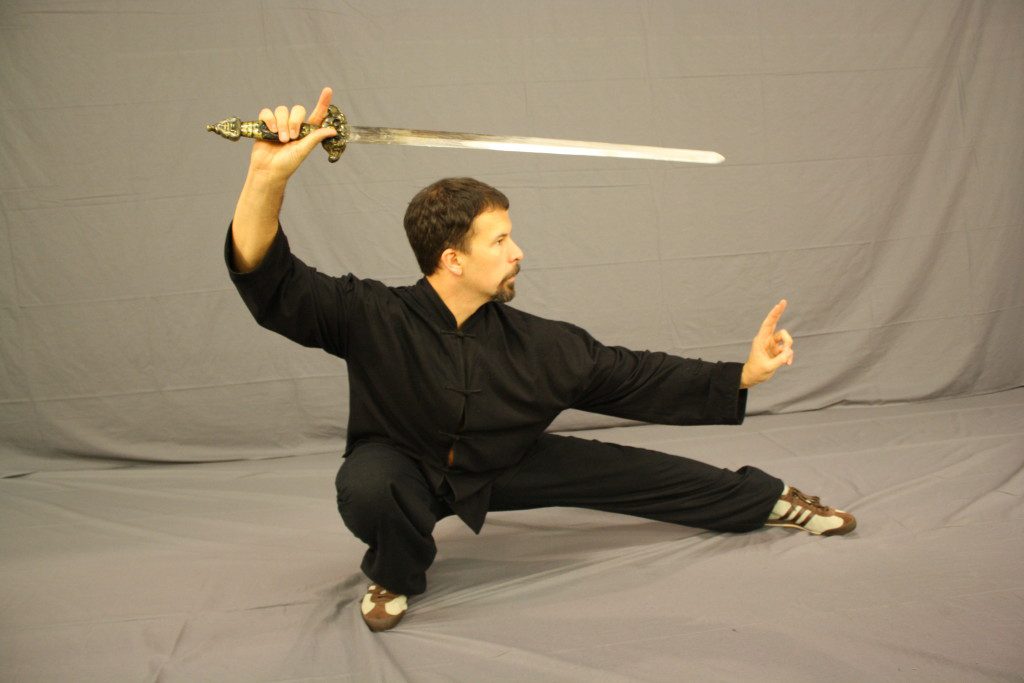
In China the sword is respected and considered the “king of the short weapons”. The Jian (tai chi sword) is a narrow-blade, double edged sword that requires the highest of skill and spirit to be an efficient practitioner…

Yang Style Tai Chi:

Yang Style tai chi is practiced for many reasons. Some of which include the martial art skills, Philosophy, mental training, therapeutic/medical benefits and spiritual training. The practice has a wide range of exercises….

Understanding Tai Chi Push Hands:

There are thousands of people teaching tai chi and tai chi pushing hands around the world. Personally I have trained with many teachers here in the states as well as teachers in China. I have found that even with the “Masters” there are few who really have a good understanding of how to apply the tai chi pushing hands concepts…

The Thirteen Postures of Tai Chi:

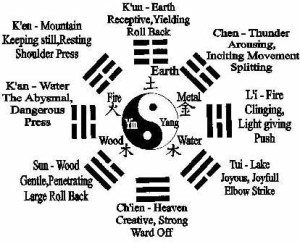
Tai chi chuan is sometimes referred to as “Thirteen postures” or “Thirteen patterns”, these patterns include “Eight Jin Patterns,” also called the “Eight Doors” and five foot work patterns referred to as the “Five Strategic Stepping patterns”. According to the Tai chi chuan classics the eight Jin patterns are related to the eight trigrams (BaGua) and the five foot work patterns are related to the “Five Elements”…

Portland Tai Chi training in Martial Applications

Tai chi is practiced in four main areas martial arts/ self-defense, philosophical/creative, medical/therapeutic and spiritual/religious. Many of us have seen people practicing tai chi. It seems so graceful and soft, but out of the softness comes a very effective short and middle range martial art…

Portland Tai Chi Training Pictures


Resources for our Members:

Syllabus of the Tai Chi & Qigong Forms taught at our center in Portland

Tai Chi Videos


  13 Responses to “Portland Tai Chi Classes for Health, Vitality, Longevity and Self Defense”

  1. [...] is trying to decide if this particular martial art is right for them, the sheer number of different Tai Chi styles can be very confusing. The simple fact is that no matter how you look at it, there are a number of [...]

  2. [...] is said that the origin of Tai Chi dates back to the 10th century AD in China. At the same time you will find that several of the [...]

  3. [...] those who are interested in the studying and practicing Tai Chi, you will find that there is much to learn. While you will undoubtedly find that the numerous forms [...]

  4. [...] people tend to think of Tai Chi in terms of martial arts and think of it as nothing more than just another form of combat. If this [...]

  5. [...] to it than that as you might surmise by the fact that that the Yin-Yang symbol is used to depict Tai Chi Chuan. In reality this martial art is an active depiction of both Taoism and Confucianism.  These were [...]

  6. [...] start by briefly looking at a description of both Tai Chi and Qigong. Tai Chi is an ancient Chinese martial art that involves the use of breathing exercises, [...]

  7. [...] do you know when you have become a Tai Chi Master? Do you become one simply because you have spent a prerequisite number of hours attending classes [...]

  8. [...] have probably heard of both Tai Chi and Qigong and are at least aware of the fact that these are both forms of ancient Chinese exercises and [...]

  9. [...] and longer life. These claims are so many, how can they be true? Why isn’t everyone doing tai chi if it benefits will help you live longer and healthier lives? After being involved with teaching [...]

  10. [...] as a result of his being hired by the Chinese Imperial family. Lu-Ch’an was brought on to teach Yang style tai chi chuan to the elite Palace Battalion of the Imperial Guards in 1850. He held that position until his [...]

  11. [...] even with the “Masters” there are few who really have a good understanding of how to apply the tai chi pushing hands concepts. One of my teachers, the most skilled that I have found in the tai chi push [...]

  12. [...] five foot work patterns referred to as the “Five Strategic Stepping patterns”. According to the Tai Chi Chuan classics the eight Jin patterns are related to the eight trigrams (BaGua) and the five foot work patterns [...]

  13. [...] and soft, but out of the softness comes a very effective short and middle range martial art. Using Tai chi martial applications you will learn how to yield and move to a more advantageous position as well [...]